At the Asian Civilisations Museum in Singapore I walked from one Buddha to the next and slowly began to notice something. The calm was always the same. The face never was.
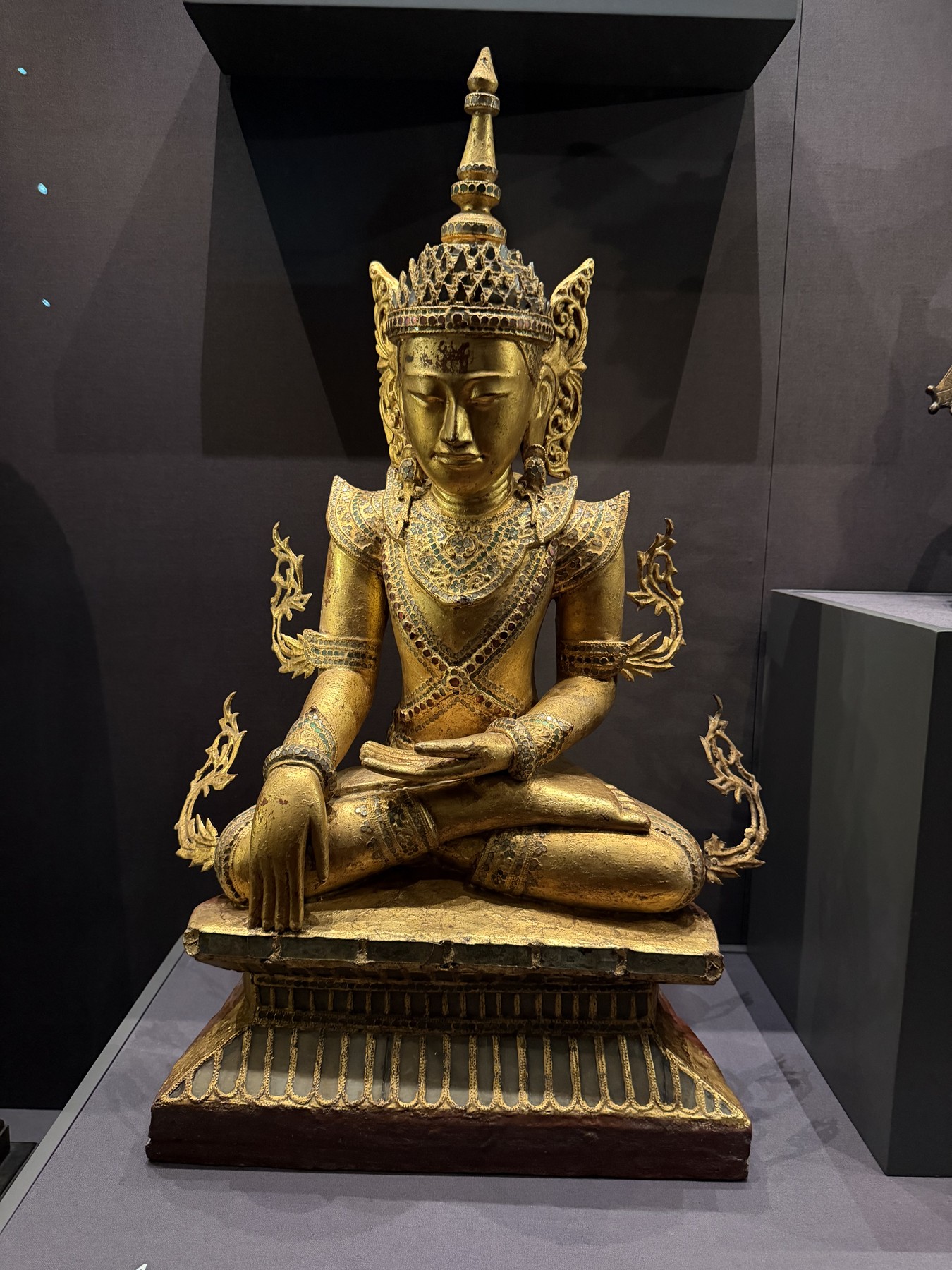
A wooden Buddha from Pagan in Myanmar stood tall in a crown of carved leaves. It was made in the thirteenth century and still carries traces of red and gold lacquer. The museum suggests it may be an idealised portrait of a Pagan king.
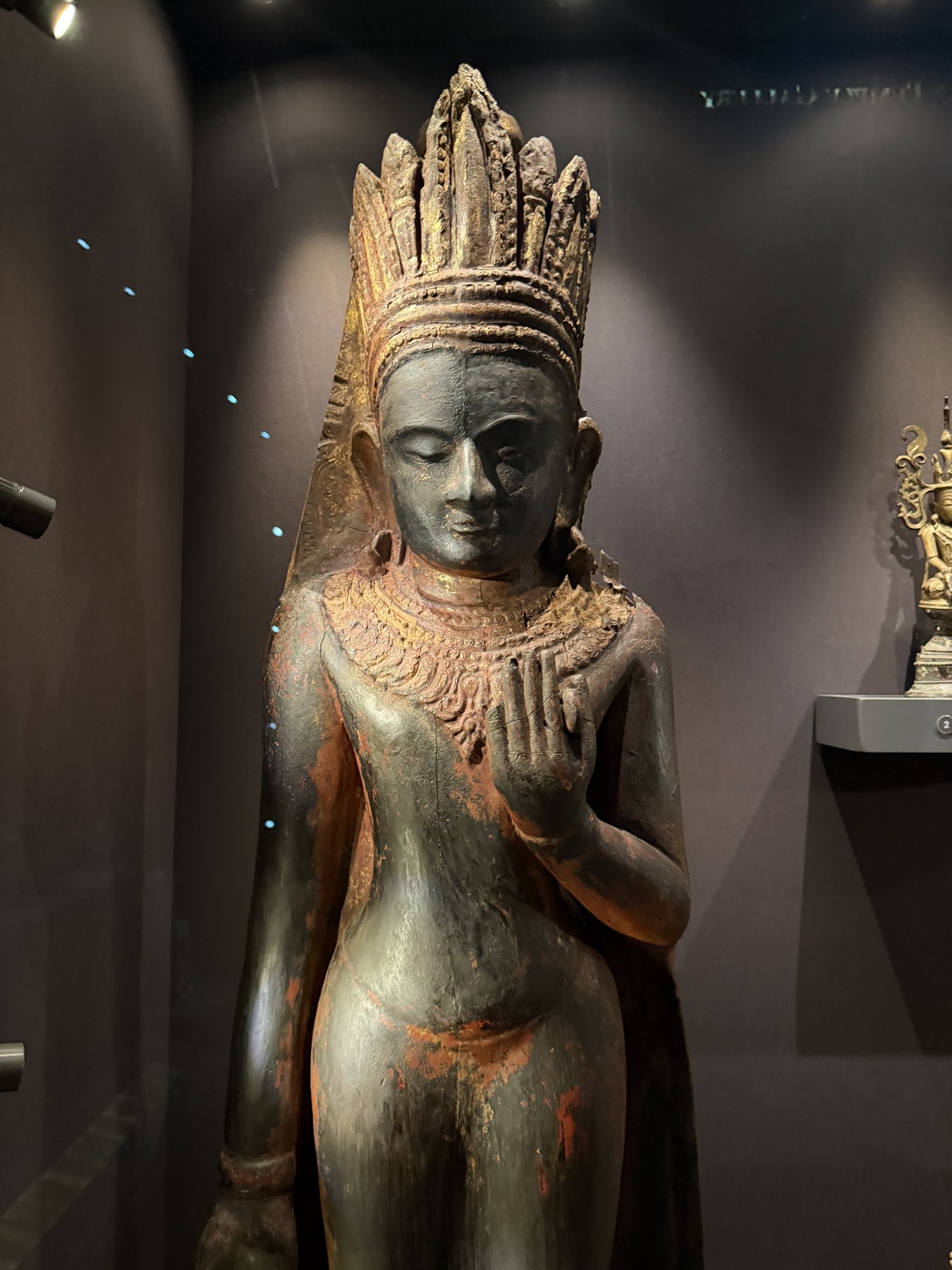
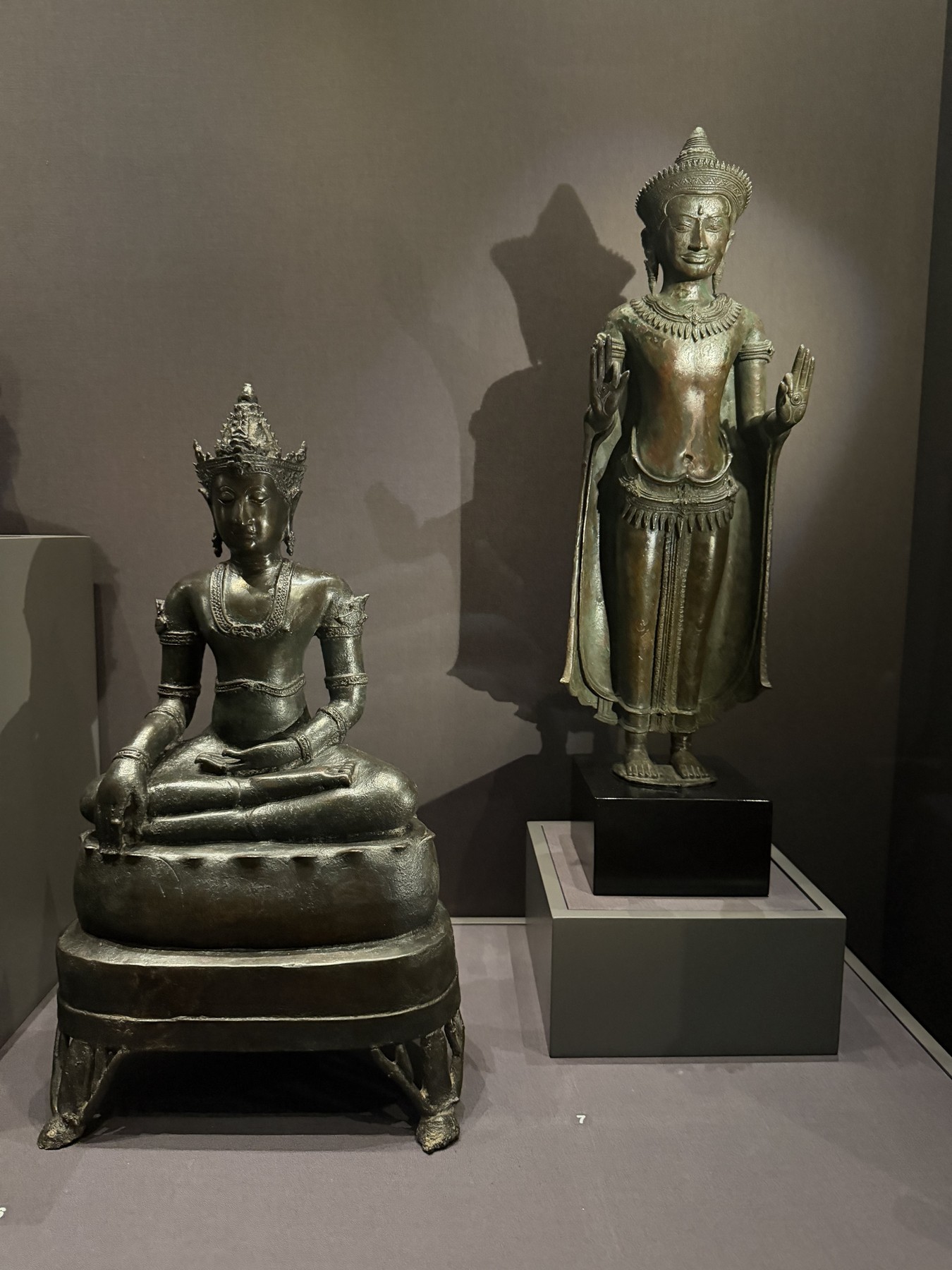
Nearby were two bronzes from Thailand. One from the north sat crowned and jewelled on a small throne. The other from central Thailand stood with both palms raised. Its tall crown and heavy jewellery recall a time when Khmer power reached deep into the region. The Buddha here is dressed as a king, a reminder of a story in which he appears in royal splendour to humble a proud ruler.
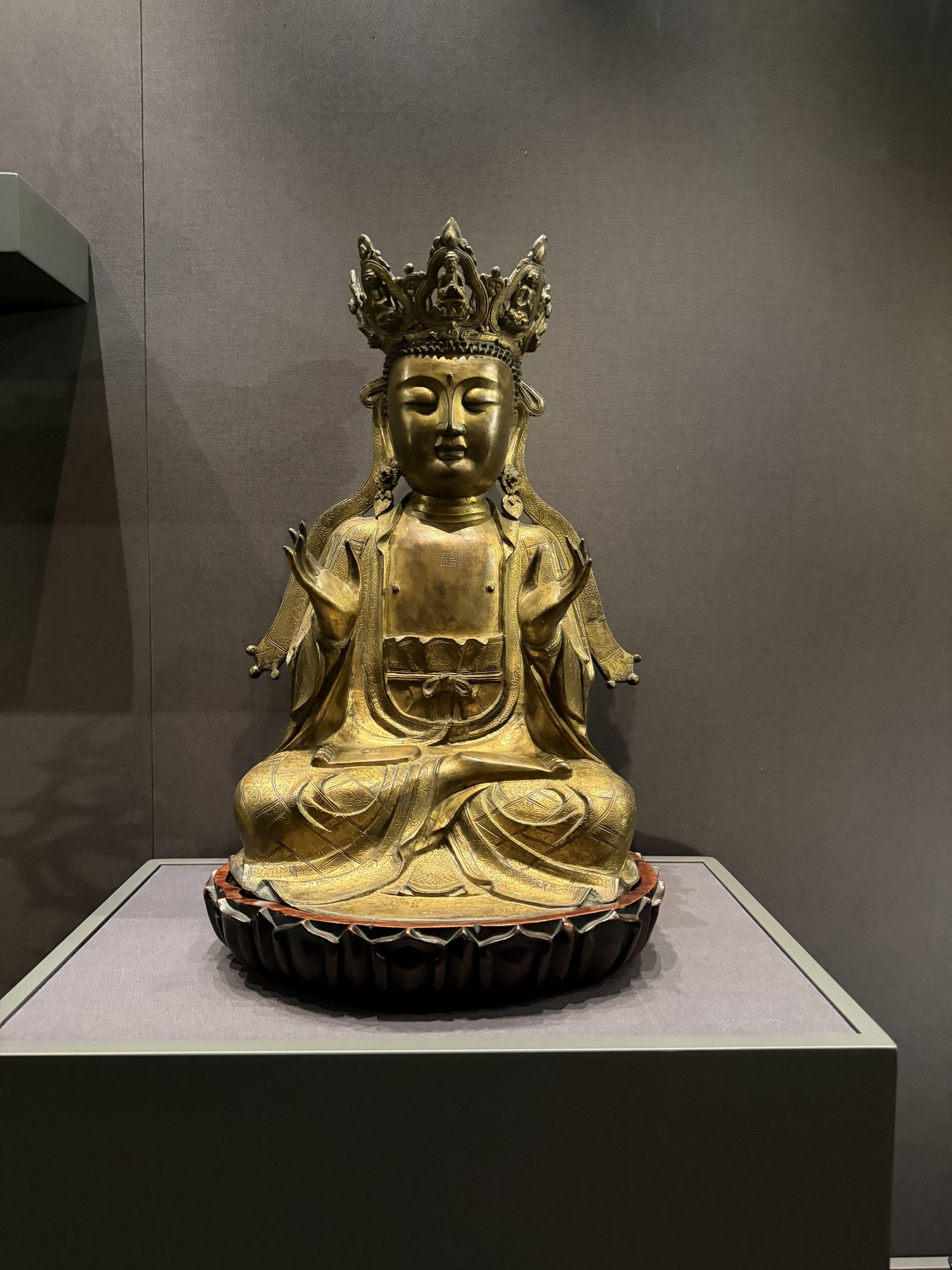
A Ming Buddha from China wore a crown of five small Buddhas. Its face was round and gentle in a way that felt unmistakably Chinese.
Then the crowns disappeared. A small gilded Buddha from Tibet and a bronze from Nepal wore simple monastic robes, their hair in tight curls. The Nepalese figure still had traces of blue painted on its hair. The museum notes this suggests it may once have stood in a Tibetan monastery, far from where it was made.
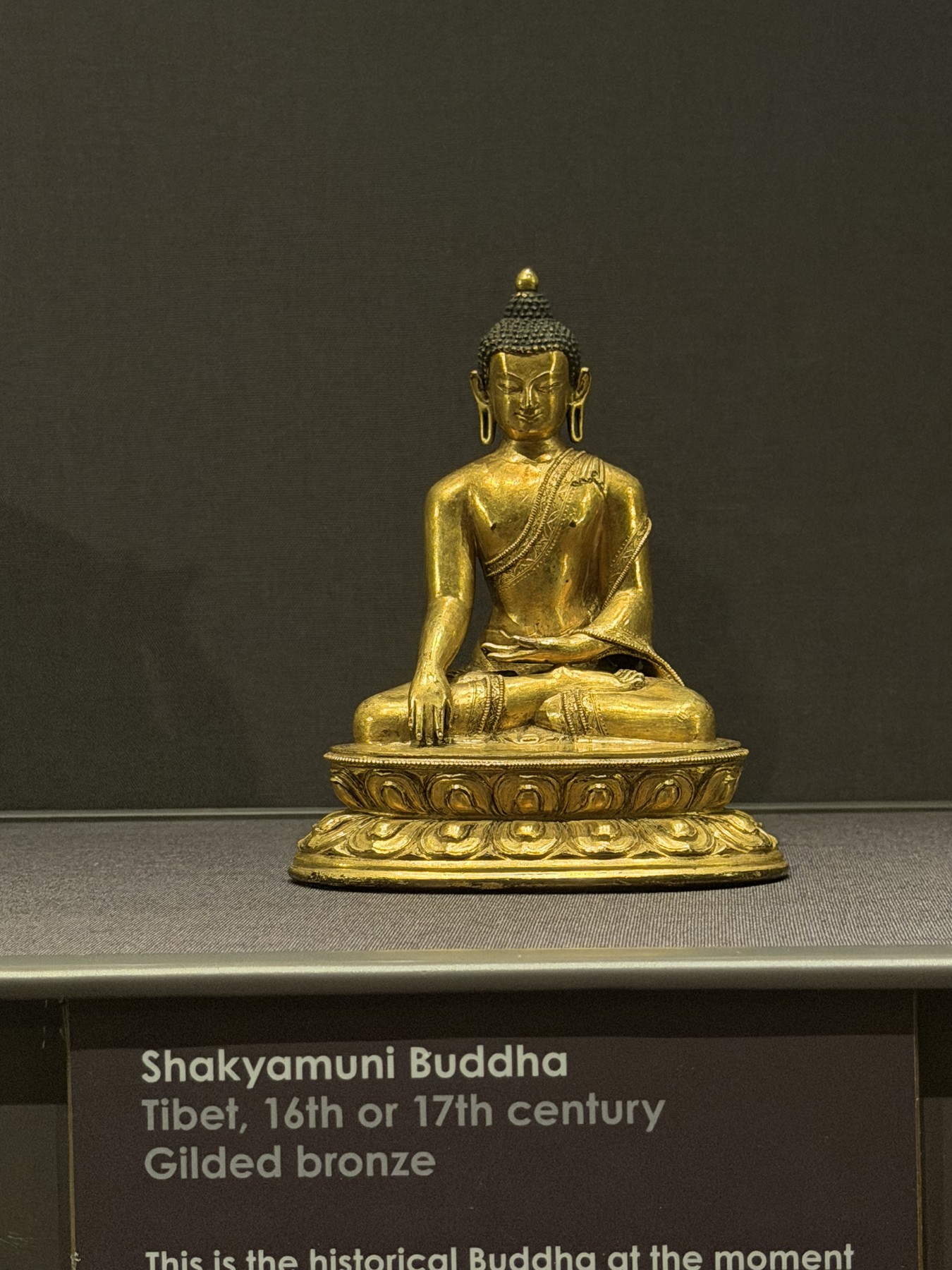
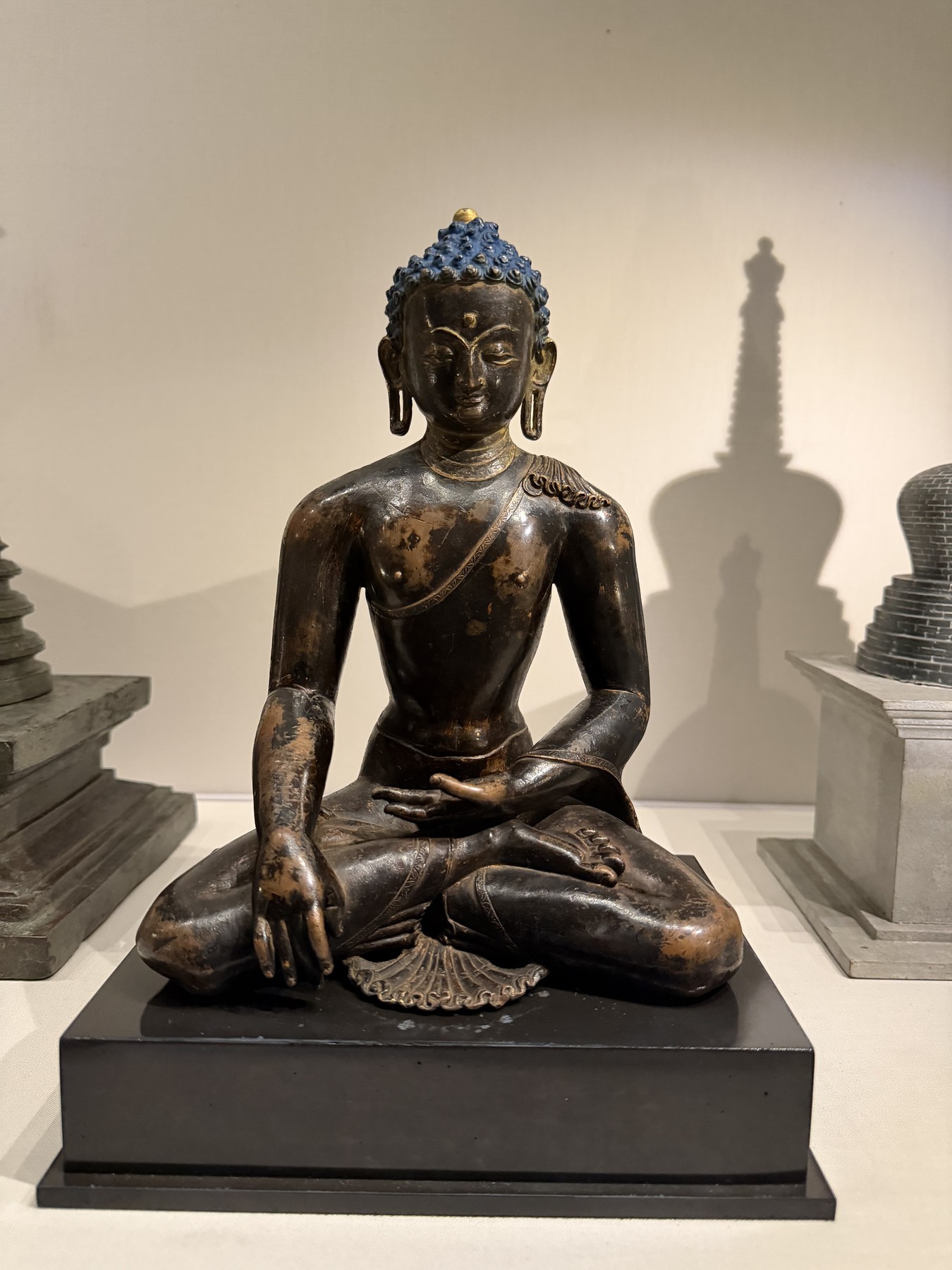
Several of them shared the same gesture. The right hand reaches down to touch the earth. It marks the moment of enlightenment, when the Buddha called the earth to bear witness.
The teaching began in India and travelled across Asia along roads and rivers and trade routes. Each place received it in its own way. Artists gave the Buddha the faces they knew, the clothes of their kings and the materials of their land.
Walking through those rooms I found that comforting. The faces changed from country to country. The stillness behind them did not. Perhaps we are all a little like that. We look different on the surface yet we are reaching for the same quiet.
Read next: 梅花香自苦寒来: What a Chinese Inkstone Taught Me About Hard Seasons and The Summit With No View.
A more mindful way to explore life.