
What does this mean, and what might it help us understand?
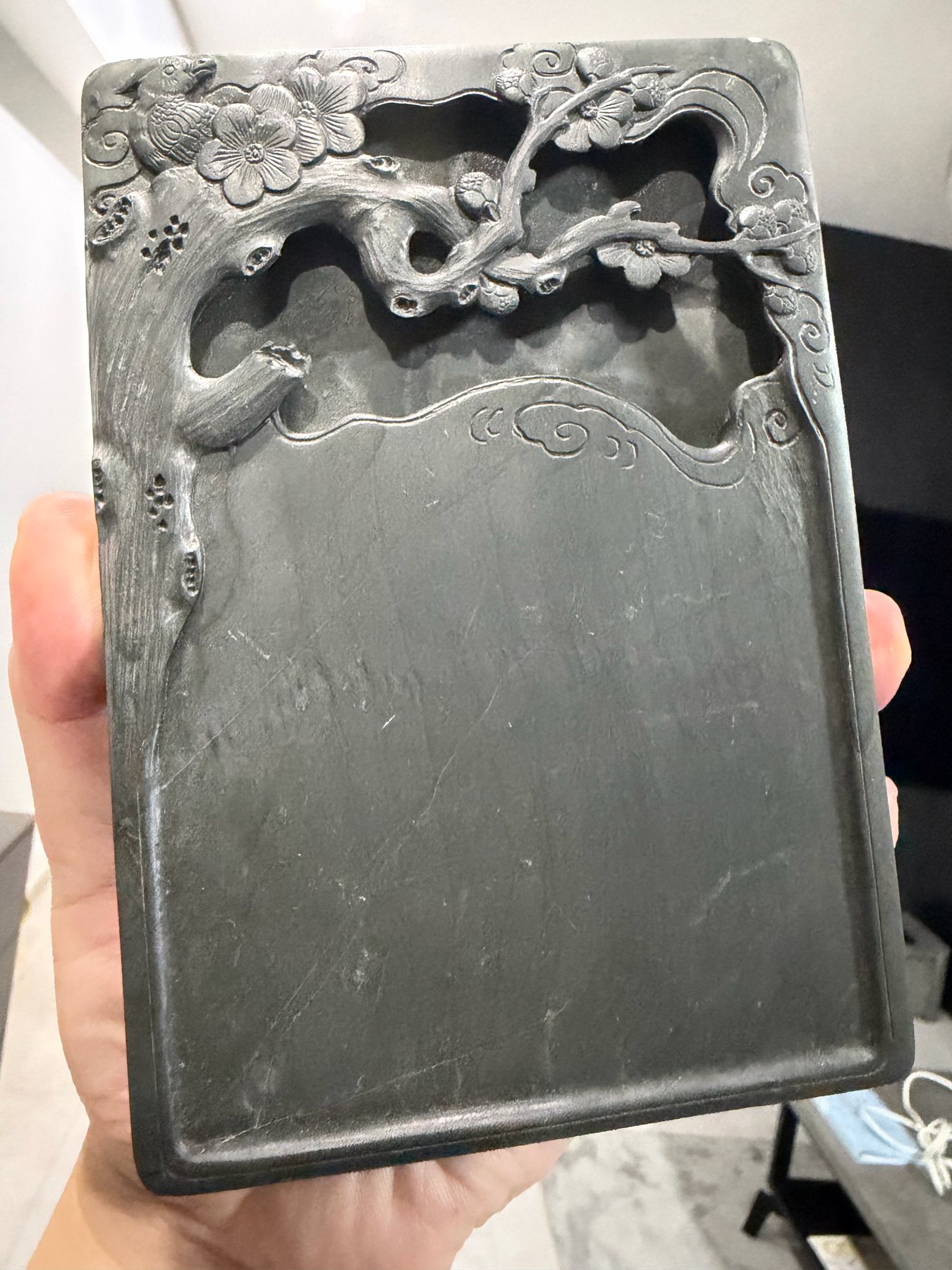
I was not looking for an inkstone. Whenever I am in Shanghai I find my way back to a small Chinese tea shop that I have visited for years. It is the kind of place where the noise of the street seems to fall away once you step inside. I go there for the tea and for the quiet conversation. On one of these visits, my eye settled on a calligraphy inkstone (砚台, yàntái) sitting quietly among the other pieces on display. I picked it up, and I found that I did not want to put it down.
Some objects find you when you are not searching for them. This was one of those.
The stone and its carving
It is a well-made piece and a handsome one. It is not new either. It carries the settled feel of something that has already lived a life before it came to me. The grinding surface is smooth and worn in the way a working tool should be. The carving above it is still crisp and full of detail.
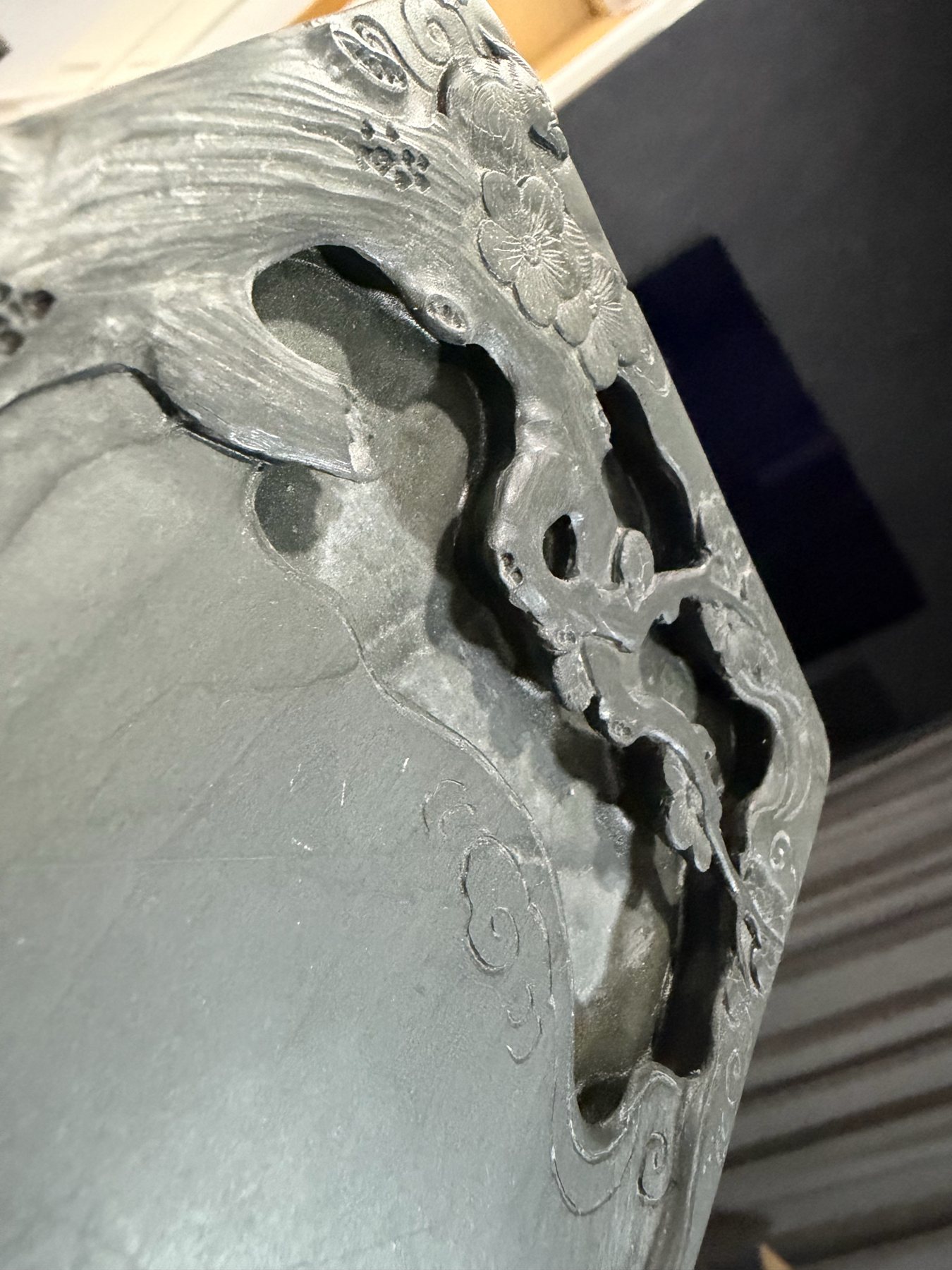
Across the top of the stone runs a gnarled branch of plum blossom (梅花, méihuā). The wood is knotted and twisted in the way old plum trees often are. From that rough branch the flowers open small and calm and perfectly formed. Soft clouds curl around them and give the scene a sense of air and stillness. Look closely and you can see buds still waiting to open.
I admired all of this. Yet the carving was not what made me stay.
The words on the back
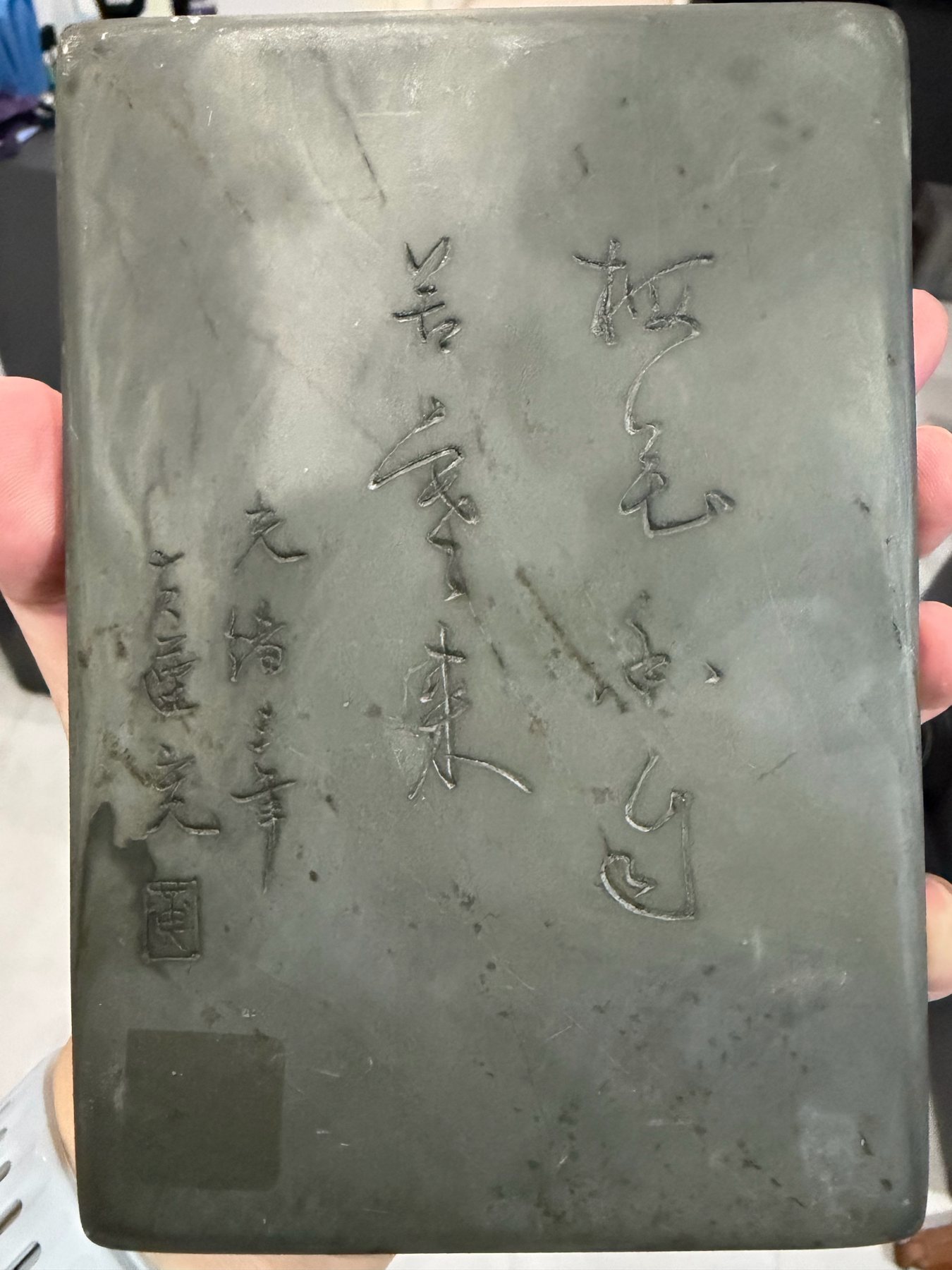
When I turned the stone over, I found an inscription cut into its back.
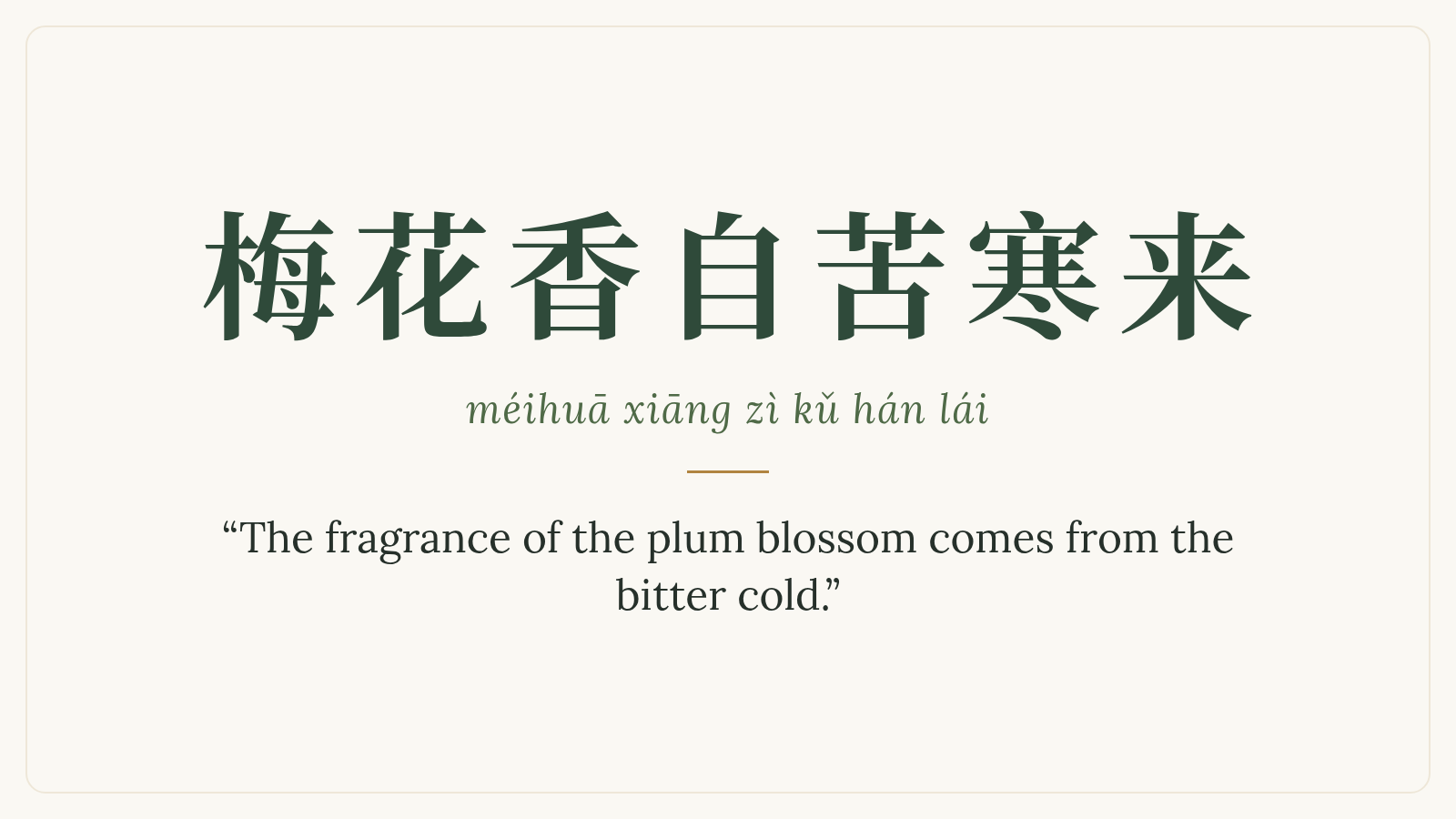
梅花香自苦寒来
méihuā xiāng zì kǔ hán lái
“The fragrance of the plum blossom comes from the bitter cold.”
The characters are carved in a flowing cursive hand, so I offer this as my own reading of them. The line is the second half of a well-known Chinese couplet.
宝剑锋从磨砺出,梅花香自苦寒来
bǎojiàn fēng cóng mólì chū, méihuā xiāng zì kǔ hán lái
“The edge of a fine sword comes from grinding. The fragrance of the plum blossom comes from the bitter cold.”
Once I understood the words, the front of the stone suddenly made complete sense. The plum tree flowers in late winter when most of the world is still bare and frozen. Its fragrance does not arrive in spite of the hard season. It arrives because of it. The front of the stone shows you the flower. The back tells you where that flower came from.
What it means to me
Standing in that tea shop, I understood why the inscription had stopped me. It expressed something I have believed for most of my life but had rarely seen put so simply.
Hardship has to be walked through before we can enjoy the fruits of our labour. There is no real way around it. A sword does not find its edge without the grinding. A plum tree does not bloom without first enduring the winter.
I grew up in a less privileged family and I saw this truth up close. Those difficult years were not pleasant and I will not pretend otherwise. Yet when I look back now, I can see that the hardest periods were often the ones that shaped a better version of us. They asked for patience and steadiness and effort. In return they gave us something that easier years might never have given.
I have also come to believe that good things are worth the wait. What feels like a delay is sometimes a quiet preparation. Things are being put in place for what is coming next even when we cannot see it. We rarely recognise this while it is happening. Most of the time we only understand it afterwards.
The harvest also means more when the right effort has gone into it. Something earned slowly carries a weight that something simply handed to us does not. The fragrance is sweeter because of the cold that came before it.
So I have learned to see difficult periods as a kind of preparation. The task is not to pretend that they are easy. The task is to take them in stride. It is to stay calm and clear and to cope with whatever comes. Most of all it is to trust that these seasons have a purpose even when that purpose is not yet visible.
There is a gentle irony in finding this message on an inkstone. Grinding ink is slow and patient work. You add a little water and move the inkstick against the stone in steady circles again and again until the ink is ready. There is no way to hurry it. The very tool that carries the proverb asks you to practise it every time you use it.
Carrying it into everyday life
I do not want to turn an old couplet into a list of rules. Still, a few quiet reminders have stayed with me since I brought the stone home.
- Name the season you are in. When life is hard it helps to recognise it as winter. A season passes. It is not a permanent state.
- Stay calm and clear. Hard times are easier to face when I slow down and breathe and deal with what is actually in front of me rather than everything I fear might come.
- Keep grinding the ink. Small and steady effort repeated day after day is often what the real work consists of.
- Let good things take their time. If something has not arrived yet, perhaps I am still being prepared for it.
- Notice the fragrance when it comes. When the harvest does arrive I try to pause and remember the effort behind it. I try to be grateful for both.
A closing thought
The inkstone now sits where I can see it every day. Most mornings I notice the plum blossom first, just as I did in the tea shop. But it is the words on the back that I carry with me.
The cold is not the opposite of the bloom. It is part of how the bloom comes to be. I find that a calm and hopeful thing to remember, especially in those seasons when spring still feels far away.
FAQ
What does 梅花香自苦寒来 mean?
It means “the fragrance of the plum blossom comes from the bitter cold.” It suggests that what is fine and lasting often grows out of hardship. It is the second line of the couplet 宝剑锋从磨砺出,梅花香自苦寒来.
What is an inkstone?
An inkstone (砚台) is a stone used in Chinese calligraphy for grinding ink. A solid inkstick is rubbed against the stone with a little water to make liquid ink. Many inkstones are carved and decorated, which makes them works of craft as well as tools.
Why plum blossom?
The plum tree flowers in late winter while the weather is still cold and the branches around it are bare. For this reason it has long been a symbol of resilience and quiet strength in Chinese culture. That is also why the carving on the front of my inkstone suits the words on its back so well.
A more mindful way to explore life.