
What does this mean, and what might it help us understand?
Choosing a tennis racket, and the assumptions I carry into the shop
How often do we make decisions based on what we read, what we research and what other people tell us, rather than on what we actually experience?
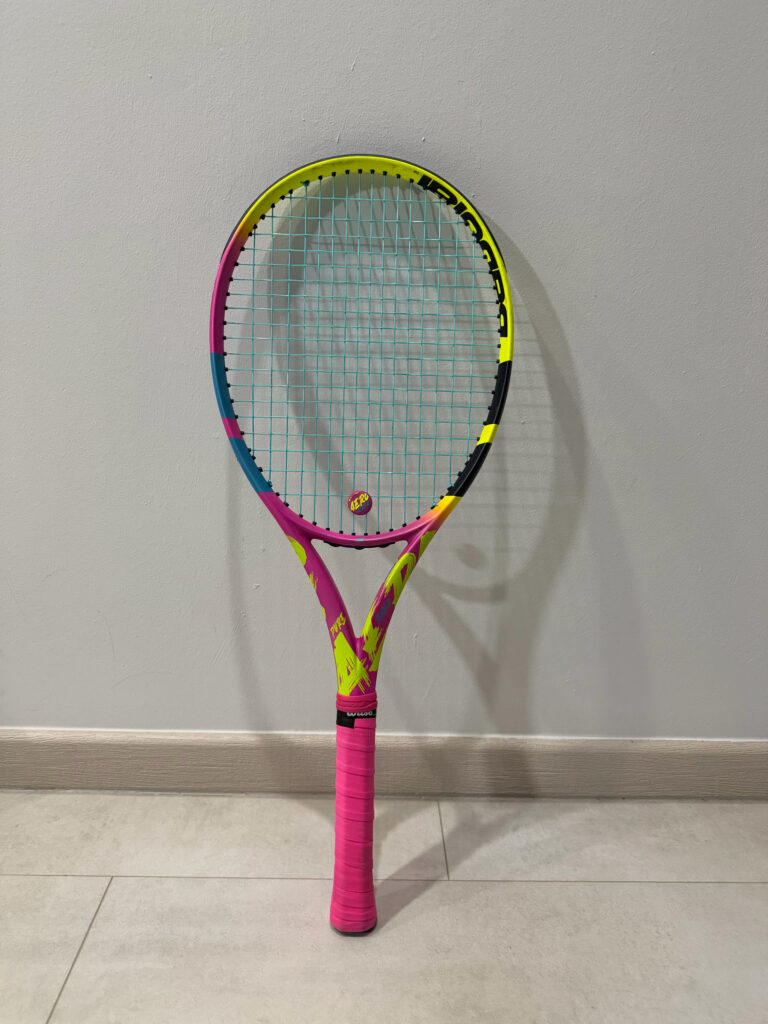
The first racket
Three years ago, when I decided to get myself a tennis racket, I walked into Queensway Shopping Centre, looked at the ones that caught my eye and bought one that I liked. The weight felt good in my hands, the grip fitted and the colours appealed to me. That was pretty much my decision-making process.
I walked out with a Babolat Pure Aero Rafa, weighing 295g.
I was a complete beginner at the time, blissfully unaware that I had picked up a racket with a swing weight that was probably more than my arm could comfortably handle. I was under the impression that a heavier racket would help me return balls further, because I could borrow some weight from the racket.
Three years later, I am still playing with my Rafa, and I still love its colours. My arm, however, continues to remind me that a swing weight of around 315 to 325 is rather demanding for me. I could probably return more balls and last longer on court with an easier racket.
But when I catch the ball right on the sweet spot? Oh, the returns I can produce!
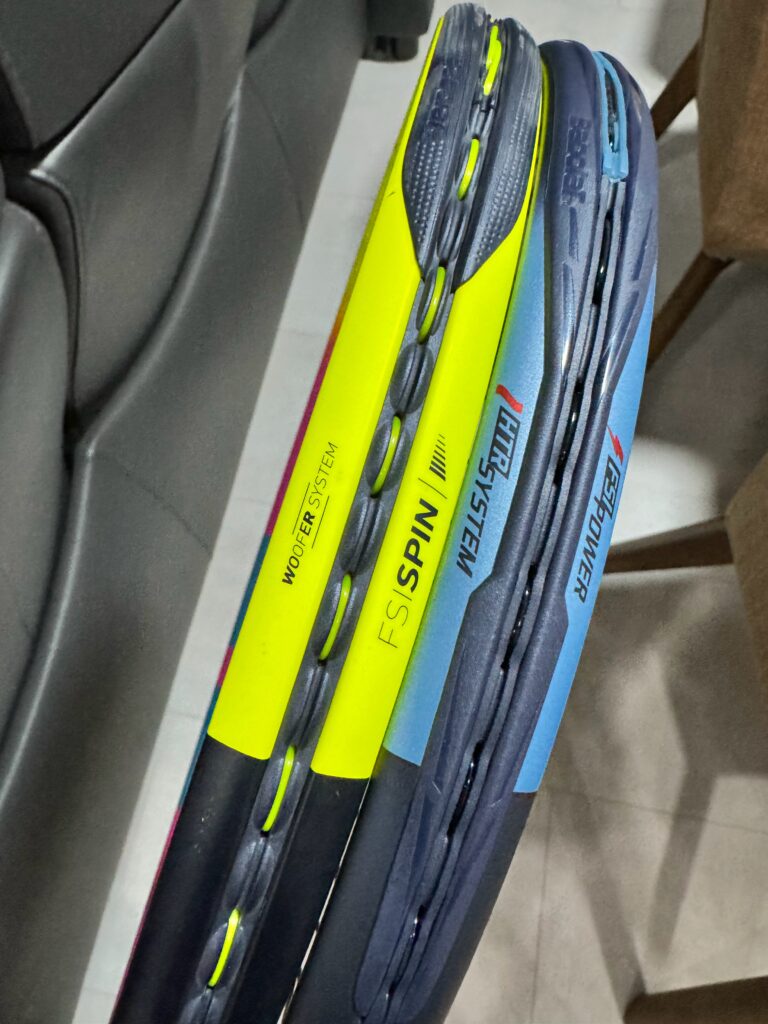
Back in the shop
Now I am looking for a second racket. I thought that after three years of playing, I would understand my game and know what I wanted a little better. Apparently not.
I am still biased. I still believe head-heavy rackets are superior. Why? Because I think that extra weight gives me just that little bit more spin. Is that actually true for my game? I am not entirely sure.
I walk into a racket shop, look at the options, pick up a few, and remind myself that Head rackets would be a good option for me, because their handles can be fitted with a different pallet to change the grip size. I am somewhere between a grip 0 and a grip 1, with rather small hands, and being able to take the grip down from a 1 to a 0 would work well for me, since not many 300g rackets come in a grip size 0.
Then I look at them again and shake my head. They are just not pretty enough for what I am looking for.
And so I find myself walking away. Nothing interests me. Nothing makes me want to reach for my wallet. I am not buying one.
What Am I Really Looking For?
It took me a while to realise what was happening. I say I am looking for a racket that suits my game, but perhaps I am really looking for one that satisfies my existing preferences. I want it pretty, I want it weighty, and I want it to confirm what I already believe.
Sometimes, we are not looking for the best choice. We are looking for reasons to justify the choice we have already made in our heads.
Perhaps that is a little confirmation bias at work. We become so attached to what we believe that we stop being open to the possibility that something else might work better.
But there is another side to decision-making. We can spend hours researching, comparing specifications and reading reviews, yet none of these can tell us exactly what something will feel like in our own hands.
A racket can look perfect on paper, have glowing reviews and tick every specification box. But none of that tells me how my arm will feel after two hours on court, or whether I will actually enjoy playing with it.
There is a Chinese saying I keep coming back to:
鞋子合不合脚,只有脚知道。
Only the feet know whether the shoes fit.
Perhaps good decision-making is about knowing when to listen and when to trust ourselves. Be open enough to question what we think we know, willing enough to try something different, but confident enough to recognise what works for us.
The next time I walk into a racket shop, I should be willing to put aside my preconceived ideas and give something different a chance. But if I still prefer the heavier racket after trying it, that is my decision to make.
Just please, let it be pretty too.
What is confirmation bias?
Confirmation bias is our tendency to look for, notice and remember information that supports what we already believe, while giving less weight to anything that challenges it. It is not about being careless. Even when we research carefully, we can end up reading the reviews that agree with us and skipping the ones that do not. One simple check is to ask yourself, “What would change my mind?” Then look for that on purpose.
Read next: 梅花香自苦寒来: What a Chinese Inkstone Taught Me About Hard Seasons and The Summit With No View.
A more mindful way to explore life.